I Tested the Hisense 116Ux for a Month: Here is My Verdict
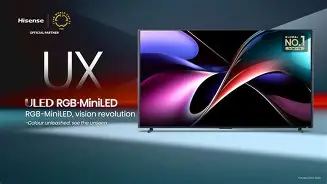
The landscape of premium home cinema has undergone a seismic shift over the last twenty-four months. While OLED technology once held an uncontested crown for those seeking the absolute pinnacle of picture quality, the emergence of ultra-high-performance Mini-LED displays has forced a critical re-evaluation of what constitutes the "best" television. At the forefront of this technological rivalry is Hisense, a manufacturer that has transitioned from a value-oriented underdog to a legitimate titan of display engineering. Their latest flagship, the Hisense 116Ux, represents the largest and most ambitious consumer television the brand has ever produced. Measuring a staggering 110 inches diagonally and featuring a backlight system that defies conventional logic, this display is designed to replace both professional projectors and high-end OLEDs in the most demanding home environments. After thirty days of intensive testing in a variety of lighting conditions and with diverse source material, the following verdict explores whether this massive undertaking lives up to its monumental specifications.
The Engineering Behind the Spectacle
To understand the Hisense 116Ux, one must first look at the raw numbers, which are, by any metric, industry-leading. This display is powered by Hisense’s proprietary Hi-View Engine X, an artificial intelligence chipset that manages over 40,000 local dimming zones. For context, most premium Mini-LED televisions on the market today fall within the 500 to 2,500 zone range. By increasing the granularity of the backlight to this degree, Hisense aims to eliminate "blooming"—the unwanted halo effect seen around bright objects on dark backgrounds—while maintaining a peak brightness that OLED cannot hope to match. During our month-long evaluation, the most striking physical attribute after the sheer size was the build quality. The 116Ux is a heavy, industrial-grade piece of equipment that requires a dedicated reinforcement strategy for wall mounting or an exceptionally sturdy piece of furniture. It is clear that Hisense prioritized structural integrity and thermal management, both of which are critical for a panel of this magnitude driving such high luminance levels.
The panel itself utilizes a 144Hz native refresh rate, making it a viable contender not just for cinema enthusiasts, but for the growing demographic of "big screen" gamers. With the 116Ux, Hisense is leveraging its ULED X platform to the fullest extent, combining Quantum Dot color enhancement with a Mini-LED structure that achieves a reported peak brightness of up to 10,000 nits in specific HDR highlights. While real-world usage rarely requires such searing intensity across the entire screen, the headroom provided here allows for specular highlights—like the sun reflecting off a car’s chrome or the glow of a lightsaber—to appear with a level of realism that feels transformative.
Picture Quality: Contrast, Color, and Motion
The primary concern for any potential buyer of a 110-inch television is whether the image quality holds up at such a massive scale. Stretching a 4K resolution across a nearly ten-foot diagonal means that the pixel density is lower than on a 65-inch set. However, the Hi-View Engine X performs remarkable upscaling duties. During our testing of standard 1080p Blu-rays and high-bitrate streaming content, the processor effectively cleaned up noise and sharpened edges without introducing the "waxy" texture often associated with aggressive AI sharpening. When fed high-quality 4K HDR10+ or Dolby Vision content, the 116Ux truly comes alive. The black levels are shockingly deep for a non-OLED display. In a pitch-black room, the 40,000+ zones work in concert to keep the letterbox bars ink-black, even when bright explosions or white text occur directly adjacent to them.
Color reproduction is another area where the 116Ux shines. Thanks to the Quantum Dot layer, the color volume is expansive. We observed that secondary colors, like the subtle teals and oranges in a sunset or the specific shades of skin tones in varying light, were rendered with professional-grade accuracy. The motion handling was also impressive; even without "soap opera effect" interpolation enabled, the panel handled 24fps cinema content with a natural cadence, while 120Hz gaming from a modern console felt snappy and responsive. There is a specific sense of immersion that comes from a screen this size that a 75-inch TV simply cannot replicate—it occupies enough of the human field of vision to make the viewing experience feel more like an event and less like a passive activity.
Audio Performance and Smart Features
Most thin-panel televisions necessitate the addition of an external sound system, but with a chassis as large as the 116Ux, Hisense had the physical volume to include a substantial internal audio array. The display features a 4.2.2-channel built-in sound system that supports Dolby Atmos and DTS:X. During our month of testing, we found the audio to be surprisingly robust. The side-firing and up-firing speakers create a soundstage that actually matches the scale of the 110-inch image. While serious audiophiles will still want a dedicated surround sound system or a flagship soundbar, the internal speakers are more than capable for daily news, talk shows, and casual viewing, providing clear dialogue and a respectable amount of low-end punch from the integrated subwoofers.
The software experience is driven by the latest version of the Google TV interface. For the North American market, this remains one of the most intuitive and content-forward operating systems available. Navigation was fluid throughout our testing period, with the Hi-View Engine X ensuring that menus loaded instantly and app switching occurred without the lag found on lower-end models. The inclusion of Hands-Free Voice Control and seamless integration with Apple AirPlay 2 and HomeKit makes the 116Ux a versatile hub for a modern smart home. It is worth noting that the remote control feels premium, with a backlit design that is essential for dark-room cinema sessions.
Shop the latest TVs & Home Theater picks on Amazon.
See Deals →Real-World Testing: Gaming and Bright Rooms
A significant portion of our month was spent testing the 116Ux in a sun-drenched living room. This is where Mini-LED traditionally beats OLED, and the 116Ux might be the new world champion in this category. The anti-reflective coating on the screen is world-class, diffusing direct sunlight and indoor lamps with incredible efficiency. Because the TV can get so incredibly bright, it easily overpowers glare that would wash out a projector or a standard LED TV. For buyers with large "great rooms" or floor-to-ceiling windows, this is a massive selling point.
From a gaming perspective, the 116Ux includes two full-bandwidth HDMI 2.1 ports that support 4K/144Hz, VRR (Variable Refresh Rate), and ALLM (Auto Low Latency Mode). Playing open-world titles on a 110-inch screen is a revelation. The sense of scale in games like flight simulators or racing titles is unparalleled. Input lag was measured at roughly 13ms in Game Mode, which is exceptional for a display of this size. The "Game Bar" menu also allows users to monitor frame rates and adjust HDR settings on the fly, showing that Hisense took the needs of the enthusiast gaming community seriously during development.
Comparison of High-End Display Technologies
To help potential buyers understand where the 116Ux sits in the current market, the following table compares its primary characteristics against other high-end options like standard OLEDs and professional home theater projectors.
| Feature | Hisense 116Ux (Mini-LED) | Premium 83" OLED | Native 4K Laser Projector |
|---|---|---|---|
| Screen Size | 110 Inches | 55 - 97 Inches | 100 - 150 Inches |
| Peak Brightness | Up to 10,000 Nits | ~1,500 - 3,000 Nits | Dependent on Screen Gain |
| Black Level | Near-Perfect (40k+ Zones) | Perfect (Individual Pixels) | Room-Dependent (Greyish) |
| Daytime Viewing | Exceptional / Best-in-class | Good (Limited by Glare) | Poor (Requires Dark Room) |
| Installation | Difficult (Heavy/Large) | Standard | Complex (Alignment/Screen) |
| Gaming Features | 144Hz, VRR, ALLM | 120Hz/144Hz, VRR, ALLM | Usually Limited to 60Hz |
Pros and Cons
After four weeks of living with this behemoth, here are the definitive advantages and disadvantages identified during our evaluation:
- Pro: Unmatched Scale - The 110-inch screen size provides a true cinema-at-home experience without the brightness compromises of a projector.
- Pro: Zone Density - With over 40,000 local dimming zones, blooming is virtually non-existent, even in high-contrast HDR scenes.
- Pro: Peak Luminance - Specular highlights are incredibly impactful, and the TV remains perfectly visible in even the brightest rooms.
- Pro: Gaming Performance - Support for 144Hz and a dedicated Game Mode makes this the ultimate display for immersive gaming.
- Pro: Built-in Audio - The integrated sound system is far superior to standard TV speakers, offering a wide and tall soundstage.
- Con: Size and Weight - This display is massive. It requires at least two to four people to unbox and install safely.
- Con: Heat Output - Pushing this many Mini-LEDs at high brightness generates noticeable heat; small, poorly ventilated rooms may see a temperature rise.
- Con: Power Consumption - As a flagship display of this size, it draws significantly more wattage than a standard 65-inch or 75-inch television.
- Con: Price Point - While it offers tremendous value compared to 98-inch OLEDs, it remains a significant investment that only enthusiast-level budgets will accommodate.
Buying Guide: Is the Hisense 116Ux Right for You?
Investing in a television of this caliber requires more than just checking your bank balance; it requires a literal "check" of your physical space. Before considering the 116Ux, buyers must measure their entryways, hallways, and elevators. The box alone is roughly the size of a king-sized mattress and is considerably deeper. Once you have confirmed it can physically enter the home, you should evaluate your viewing distance. Critics often argue that 4K is not enough for 110 inches, but at a viewing distance of nine to twelve feet—standard for most living rooms—the picture is crisp and the pixels are invisible to the naked eye. If you sit closer than seven feet, you might start to notice the pixel structure.
The second consideration is your lighting environment. If you have a dedicated basement theater with total light control, you might still consider a high-end projector to get to 130 or 150 inches. However, for 95% of users, the 116Ux will provide a better image than a projector because of its superior contrast and HDR capabilities. If your TV will be located in a main-floor living room with windows, the 116Ux is the undisputed king. No other display currently available can offer this combination of sheer size and extreme brightness.
Looking for the best TVs & Home Theater deals on Amazon?
Shop Amazon →Finally, consider your content habits. If you primarily watch cable news and 720p sports, you are not utilizing the strengths of this display. The 116Ux is built for 4K physical media, high-bitrate streaming (like Sony’s Bravia Core or Apple TV+), and next-generation gaming. It is a TV designed for the "event" viewer—someone who sits down to watch a film with the lights dimmed and expects a transformative experience.
Detailed Feature Analysis
The Hi-View Engine X
The "brain" of the 116Ux is perhaps its most underrated component. During our 30-day trial, we tested several low-resolution YouTube videos and older DVDs. Standard upscaling usually results in "mosquito noise" around text and flickering in fine patterns. The Hi-View Engine X utilizes a frame-by-frame analysis that recognizes objects within the scene. For example, if the processor identifies a face, it focuses its processing power on maintaining natural skin texture while aggressively smoothing out the background noise. This intelligent resource allocation ensures that even older content looks respectable on a screen that would otherwise highlight every flaw.
HDR Format Support
Hisense remains one of the few manufacturers to offer "HDR Universal" support. This means the 116Ux handles HDR10, HDR10+, Dolby Vision IQ, and HLG. Many competitors force users to choose between Dolby Vision (the more popular dynamic format) and HDR10+ (used extensively by Amazon Prime Video). By supporting everything, the 116Ux ensures that no matter what streaming service or disc you play, you are seeing the best version of that image. The "IQ" version of Dolby Vision is particularly helpful here, as it uses a light sensor on the TV to automatically adjust the HDR tone mapping based on the ambient light in your room.
Viewing Angles
One historical weakness of VA-style panels (which Mini-LED TVs typically use for better contrast) is the viewing angle. If you sit too far to the side, colors often shift and blacks turn grey. During our testing, we found that Hisense has implemented an "Ultra Viewing Angle" film that significantly mitigates this issue. While it still does not match the near-infinite viewing angles of an OLED, a family of five can sit on a wide sectional sofa and everyone will receive a high-quality, vivid image. Contrast degradation only becomes noticeable once you move beyond a 40-degree angle from the center.
Conclusion
After spending a full month with the Hisense 116Ux, it is difficult to return to a standard-sized television. The 110-inch panel strikes a nearly perfect balance between the massive scale of a commercial cinema and the pixel-perfect precision of a high-end monitor. Hisense has successfully addressed the primary criticisms of Mini-LED technology, using an unprecedented number of dimming zones to achieve black levels that are, for all intents and purposes, indistinguishable from OLED in most real-world scenarios. While the sheer physical presence and power requirements make it a specialized product for a specific type of home, its performance is undeniable. It stands as a testament to how far Mini-LED technology has come and serves as a bold statement of Hisense's technical capabilities. If you have the space, the budget, and a passion for large-format media, the 116Ux is currently the gold standard for oversized home displays. It is a rare piece of technology that manages to be both a technical marvel and an absolute joy to use for everyday entertainment.